Munchkin kittens
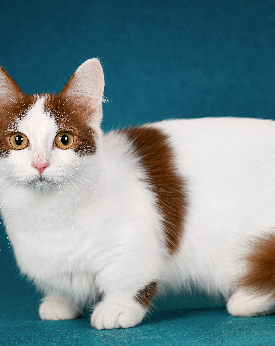
The Munchkin is recognized by its very short legs. It is a relatively new breed, documented since the 1940s and officially recognized by TICA in 1997, and is considered the original breed of dwarf cat.
Meet the breed
The Munchkin is recognized by its very short legs. It is a relatively new breed, documented since the 1940s and officially recognized by TICA in 1997, and is considered the original breed of dwarf cat. A natural genetic mutation gives the Munchkin its short legs, but otherwise the build is quite average for a small cat. Owners agree that short legs don't interfere with running and leaping. Their legs are about 3 inches shorter than a typical cat's, and they generally weigh 6 to 9 pounds.
Size and coat
Munchkins are small to medium-sized with a moderate body type. Males typically weigh 6 to 9 pounds and females 4 to 8 pounds. The hind legs can be slightly longer than the front, creating a slight rise from shoulder to rump.
They come in all coat colors and patterns, in short and long-haired varieties. The short-haired has a medium-plush coat while the long-haired has a semi-long silky coat.
Personality
Munchkins are playful and kitten-like most of their lives. They are attention-seeking and dog-like, and may follow you around the house. They are highly sociable, intelligent, and good natured, and make ideal family pets. They are confident and outgoing, not overly vocal, and they enjoy company, so consider another pet if you're away often.
They love toys and games and are known as thieves: they will steal things off counters and dressers and play with them until they disappear. Short legs don't usually prevent jumping to elevated surfaces. Favorite activities: playing with toys, wrestling, cuddling, racing around the house, climbing cat trees with low entry points, scratching posts, and basking in the sun. They are smart, trainable, and take to litter training quickly.
Feeding
Munchkins have no specific nutritional requirements. Feed an AAFCO-approved food appropriate for their life stage, often a mix of wet food (for hydration) and dry kibble (to reduce tartar). Feed measured meals two to three times a day and do not free-feed, which can lead to obesity. Follow the label's suggested servings and talk with your vet about how much your cat needs.
Grooming
Brush weekly to prevent mats or tangles; fluffy Munchkins may need more. Because of their short legs, they can struggle to groom themselves thoroughly, so watch for areas they miss. Bathing isn't necessary, though an occasional bath can cut down on shedding. They don't shed more than a typical cat. No special eye or ear care is required; contact your vet if you notice discharge, swelling, redness, buildup, or odor.
Before you adopt
Munchkins are a wonderful house cat that befriends everyone in the home, whether you have a busy house of pets and children or live quietly alone. Talk to your breeder about the health of their cats: while most Munchkins have little trouble getting around, the mutation that causes the short legs can lead to other health issues.
For more information call, text, or send us a message and we'll be happy to answer your questions. See also the FAQ and our guides.
Ready to meet your new family member?
Call, text, or email to schedule a visit.