
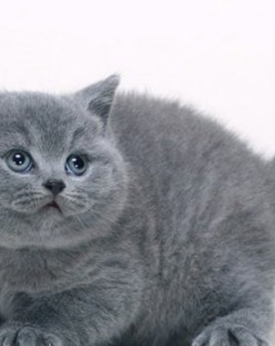
British Shorthair & Longhair kittens
The British Shorthair is a study in roundness. He has a large round head, round eyes and rounded paws.
Meet the breed
The British Shorthair is a study in roundness. He has a large round head, round eyes and rounded paws. Even his tail has a rounded tip. He was once known as the British Blue because he came only in that color, but these days his short, plush coat comes in many different colors and patterns. There is also a longhaired variety, called the British Longhair. Except for his coat resulting from Persian in the background, the British Longhair is the same as the British Shorthair.
Personality
A British Shorthair is a dignified, intelligent and affectionate companion. He's not generally a lap cat, but he will want to be at your side on the sofa or at least nearby. Females tend to have a serious demeanor, while males are more happy-go-lucky. These laidback cats can get along well with dogs and are calm around children, but most don't enjoy being hauled around. Teach children to treat them with respect and pet and play with them on the floor if that is their preference.
British Shorthairs are calm and undemanding. Males are big, easy lugs with a happy-go-lucky nature but a natural air of command. Females are more serious. Both want only to be with their people, not necessarily in a lap or being carried around, but next to them or in the same room with them. They'd much rather sit beside you, or curl up at your feet, than cuddle on your lap. They dislike being picked up, but head presses are acceptable, and they accept petting with great enthusiasm and mighty purrs of appreciation. If you're not home, they are satisfied to entertain themselves until you return.
He might be laidback, but the British Shorthair is very smart. Challenge his brain and keep him interested in life by teaching him tricks and providing him with puzzle toys that will reward him with treats.
Care
The British Shorthair is big, but he shouldn't be fat. Watch his food intake to make sure he doesn't become obese. Encourage him to chase fishing-pole toys or peacock feathers for exercise.
The breed features dense, plush short hair, with more hair per square inch than any other cat breed. Brush or comb the coat two or three times a week to keep loose hair at a minimum, and more often in spring when he sheds his winter coat. Trim the nails as needed and keep his ears clean.
British Shorthairs have relatively low energy needs and don't have a reputation for jumping onto counters or other high perches. Regularly engage your cat in play for his own health and mental stimulation. Their ability to be content on their own also means they can tolerate being home alone without separation anxiety.
The British Shorthair is slow to mature; on average, these cats reach full size by about the age of three, but some don't fully mature until the age of five.
Keep him indoors to protect him from cars, diseases spread by other cats and attacks from other animals. Always choose a kitten from a breeder who raises litters in the home and handles them from an early age, and ask about the parents' temperaments.
History
One of England's oldest cat breeds, the British Shorthair actually has Roman roots. When the Roman forces invaded England, they brought cats to protect their food supplies from rodents. The cats colonized the area and were a common street cat for centuries. In the late 1800s, Harrison Wier is credited with becoming the first cat breeder, creating through selective breeding the cat we know today. The breed nearly ceased to exist during World War II; post-war, the remaining bloodlines were crossed with other breeds including the Domestic Shorthair, Russian Blue, and Persian to preserve it.
The first registry to recognize the British Shorthair was the American Cat Association in 1967, followed by The International Cat Association in 1979 and the Cat Fanciers Association in 1980. The Cheshire Cat of Alice in Wonderland was based on the British Shorthair.
For more information call, text, or send us a message and we'll be happy to answer your questions. See also the FAQ and our guides.
Ready to meet your new family member?
Call, text, or email to schedule a visit.